
The Grammar Index Blog

Grammar explained, teaching ideas, and news from the apps.

3 posts matching “grammar mistakes to avoid”

Teaching

Daily Grammar Practice Routine for Everyday English Sentences

Use the present simple to describe everyday routines: “I get up” and “she gets up.” A daily grammar practice routine can pair this pattern with common phrasal verbs and collocations, helping you build clear sentences about your day. It’s easy to know what you want to say but hesitate over the verb form or choose a phrase that sounds unnatural. That uncertainty is part of learning, and focused practice gives you a clear way to notice how everyday sentences are put together. Learn how the present simple describes habits, how frequency words add detail, and how phrasal verbs such as “get up” and “tidy up” fit into routine descriptions. Then practise with your own daily activities, connecting grammar to sentences you can use in conversation and writing.

formal English grammar

Master business email grammar and etiquette with this practical guide. Learn how to write clear, professional, and courteous messages that get quick results.

An email can be grammatically correct and still leave the reader unsure what to do next. That often happens when clear wording and professional tone are treated as separate concerns. Business email grammar and etiquette work best together: grammar makes the message easy to understand, while etiquette helps it feel appropriate to the person receiving it. If you’re unsure how formal to sound, how direct to be, or whether a sentence says what you intend, you’re not alone. A rushed phrase, unclear request, or awkward tone can distract from your point. The solution isn’t to memorise a long list of disconnected rules. Use a simple method that connects your audience, purpose, wording, and review.

Teaching

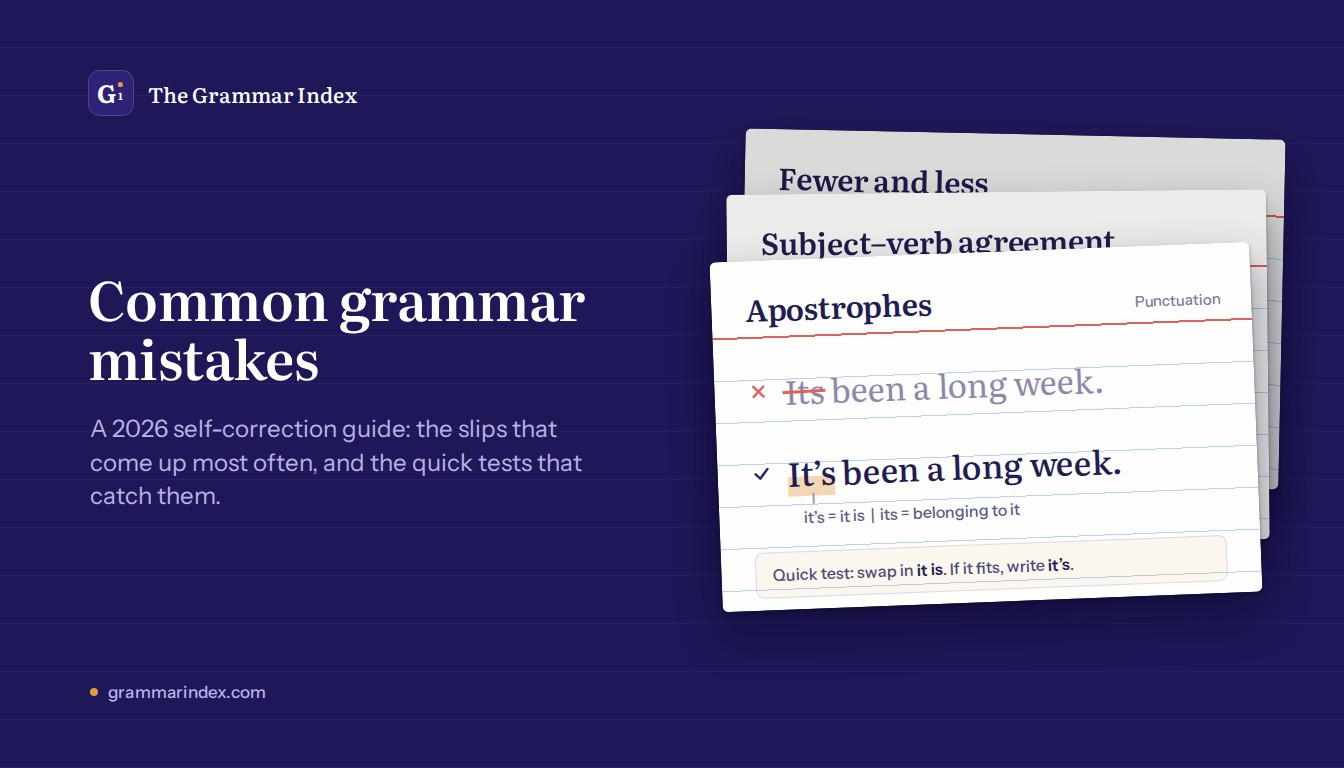
Common Grammar Mistakes: 2026 Self-Correction Guide

Nearly 80% of hiring managers immediately disqualify applications containing basic writing errors, yet automated tools still let embarrassing missteps slip through unnoticed. Software alerts merely flag surface symptoms without teaching genuine precision. Achieving long-term accuracy and correcting common grammar mistakes requires diagnosing the root structural habits that generate errors, rather than blindly trusting algorithmic suggestions that warp your intended meaning.

An unhandled error has occurred. Reload Close