The Grammar Index Blog

Grammar explained, teaching ideas, and news from the apps.

4 posts matching “common syntax errors”

Learning English

How to Improve Clarity in Writing for Every Reader

A sentence can be grammatically correct and still leave readers guessing. To learn how to improve clarity in writing, replace vague words with specific ones, make the main point easy to find, and remove wording that obscures it. Vague writing often leaves readers unsure who did what, what a word refers to, or how one idea connects to the next. It’s easy to assume that more explanation always makes a message clearer. But extra words can bury the point, while a short sentence can still confuse readers if it relies on jargon or unclear references. Clarity comes from giving readers the information they need in an order they can follow.


Grammar

Common English Grammar Mistakes Made in Hospitality

The most common English grammar mistakes in hospitality are wrong verb tenses, missing articles (a, an, the), subject-verb agreement errors, confused prepositions of time and place, treating uncountable nouns such as luggage and information as plurals, badly formed questions, and wording that sounds too direct for a guest. Most can be fixed with a short list of patterns that staff practise often: past tense for finished actions, a/an before a single countable noun, at for clock times, and Would you like…? or Could I…? for polite offers and requests. In hospitality, communication shapes the guest experience. Whether you are welcoming guests at reception, answering email enquiries, confirming reservations or replying to online reviews, clear and correct English builds confidence and trust. For hotels, restaurants, resorts, tour operators and event venues with international teams, a few grammar habits can make the difference between a guest who feels looked after and one who feels confused. This guide explains ten frequent mistakes, shows how to correct each one, and suggests a practical way to build grammar practice into a busy working week.

formal English grammar

Master business email grammar and etiquette with this practical guide. Learn how to write clear, professional, and courteous messages that get quick results.

An email can be grammatically correct and still leave the reader unsure what to do next. That often happens when clear wording and professional tone are treated as separate concerns. Business email grammar and etiquette work best together: grammar makes the message easy to understand, while etiquette helps it feel appropriate to the person receiving it. If you’re unsure how formal to sound, how direct to be, or whether a sentence says what you intend, you’re not alone. A rushed phrase, unclear request, or awkward tone can distract from your point. The solution isn’t to memorise a long list of disconnected rules. Use a simple method that connects your audience, purpose, wording, and review.

Teaching

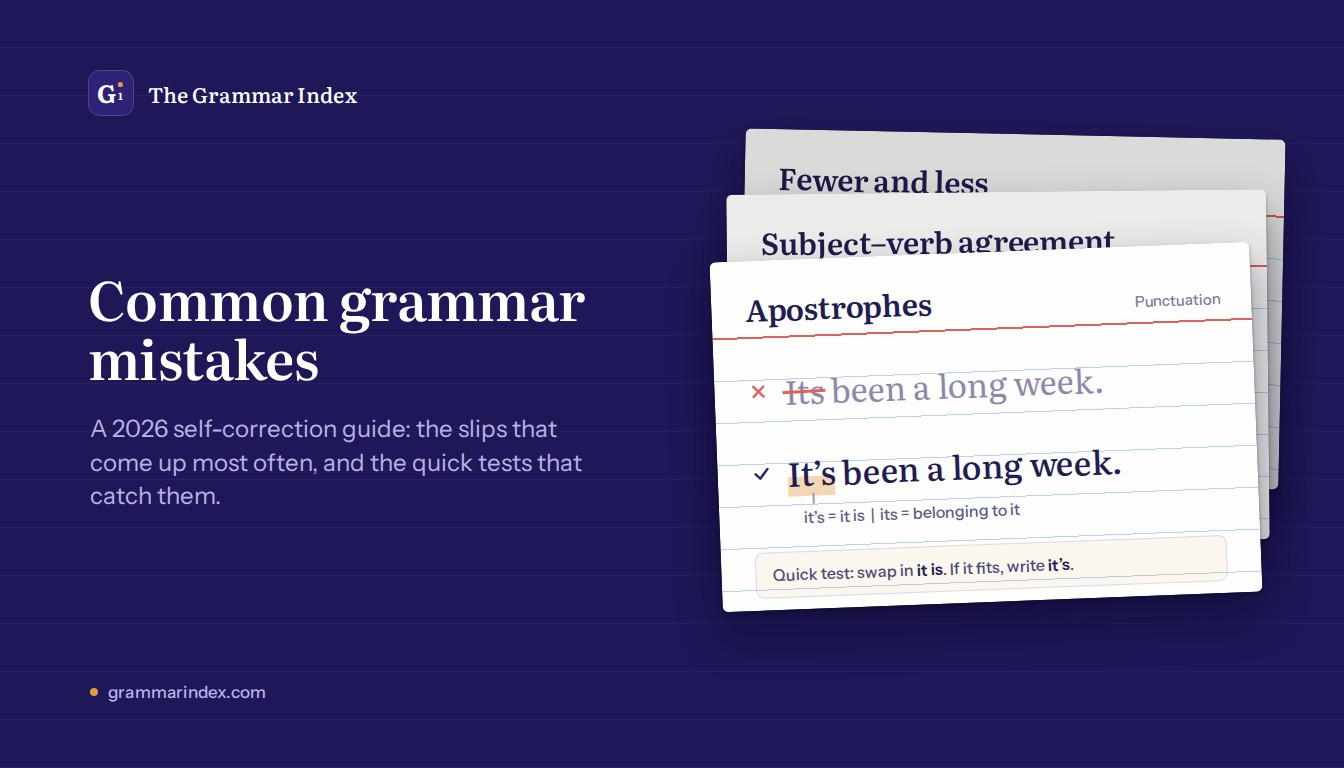
Common Grammar Mistakes: 2026 Self-Correction Guide

Nearly 80% of hiring managers immediately disqualify applications containing basic writing errors, yet automated tools still let embarrassing missteps slip through unnoticed. Software alerts merely flag surface symptoms without teaching genuine precision. Achieving long-term accuracy and correcting common grammar mistakes requires diagnosing the root structural habits that generate errors, rather than blindly trusting algorithmic suggestions that warp your intended meaning.

An unhandled error has occurred. Reload Close